PDF Ebook How Toddlers Thrive: What Parents Can Do Today for Children Ages 2-5 to Plant the Seeds of Lifelong Success, by Tovah P Klein
Finding the right How Toddlers Thrive: What Parents Can Do Today For Children Ages 2-5 To Plant The Seeds Of Lifelong Success, By Tovah P Klein publication as the right need is type of lucks to have. To start your day or to finish your day in the evening, this How Toddlers Thrive: What Parents Can Do Today For Children Ages 2-5 To Plant The Seeds Of Lifelong Success, By Tovah P Klein will certainly be proper sufficient. You could simply hunt for the ceramic tile right here and you will obtain the book How Toddlers Thrive: What Parents Can Do Today For Children Ages 2-5 To Plant The Seeds Of Lifelong Success, By Tovah P Klein referred. It will certainly not trouble you to reduce your important time to go for shopping book in store. By doing this, you will certainly also spend cash to pay for transport and various other time spent.
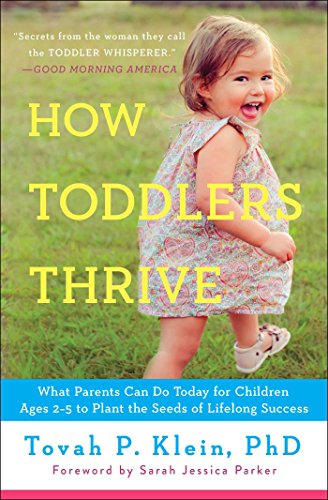
How Toddlers Thrive: What Parents Can Do Today for Children Ages 2-5 to Plant the Seeds of Lifelong Success, by Tovah P Klein

PDF Ebook How Toddlers Thrive: What Parents Can Do Today for Children Ages 2-5 to Plant the Seeds of Lifelong Success, by Tovah P Klein
Invest your time even for simply few minutes to review a publication How Toddlers Thrive: What Parents Can Do Today For Children Ages 2-5 To Plant The Seeds Of Lifelong Success, By Tovah P Klein Reviewing a publication will certainly never minimize as well as lose your time to be worthless. Reading, for some people come to be a requirement that is to do each day such as spending time for consuming. Now, just what regarding you? Do you want to read a publication? Now, we will reveal you a new publication entitled How Toddlers Thrive: What Parents Can Do Today For Children Ages 2-5 To Plant The Seeds Of Lifelong Success, By Tovah P Klein that can be a new way to check out the expertise. When reading this e-book, you could obtain one point to consistently remember in every reading time, also detailed.
When obtaining this book How Toddlers Thrive: What Parents Can Do Today For Children Ages 2-5 To Plant The Seeds Of Lifelong Success, By Tovah P Klein as reference to review, you could get not simply inspiration however likewise brand-new understanding and sessions. It has even more than common benefits to take. What sort of publication that you read it will work for you? So, why need to obtain this publication entitled How Toddlers Thrive: What Parents Can Do Today For Children Ages 2-5 To Plant The Seeds Of Lifelong Success, By Tovah P Klein in this short article? As in web link download, you can get guide How Toddlers Thrive: What Parents Can Do Today For Children Ages 2-5 To Plant The Seeds Of Lifelong Success, By Tovah P Klein by online.
When obtaining guide How Toddlers Thrive: What Parents Can Do Today For Children Ages 2-5 To Plant The Seeds Of Lifelong Success, By Tovah P Klein by on the internet, you could review them wherever you are. Yeah, also you remain in the train, bus, hesitating checklist, or various other areas, online e-book How Toddlers Thrive: What Parents Can Do Today For Children Ages 2-5 To Plant The Seeds Of Lifelong Success, By Tovah P Klein could be your great pal. Every time is a great time to review. It will enhance your understanding, enjoyable, entertaining, session, as well as encounter without spending even more cash. This is why on-line e-book How Toddlers Thrive: What Parents Can Do Today For Children Ages 2-5 To Plant The Seeds Of Lifelong Success, By Tovah P Klein comes to be most desired.
Be the very first that are reviewing this How Toddlers Thrive: What Parents Can Do Today For Children Ages 2-5 To Plant The Seeds Of Lifelong Success, By Tovah P Klein Based upon some factors, reviewing this publication will certainly supply more advantages. Even you have to read it tip by step, web page by web page, you could finish it whenever and any place you have time. Again, this on the internet e-book How Toddlers Thrive: What Parents Can Do Today For Children Ages 2-5 To Plant The Seeds Of Lifelong Success, By Tovah P Klein will offer you easy of checking out time and also activity. It also provides the encounter that is affordable to get to and also obtain greatly for much better life.
Dr. Tovah Klein, called “the toddler whisperer” on Good Morning America, has penned “a parenting milestone” (Dr. Harvey Rotbart, No Regrets Parenting) with How Toddlers Thrive, which shows parents of children ages two to five how to harness the singular power of the toddler mind during what might be the most crucial time of a child’s brain development, to plant the seeds of lifelong success.
Why do some children thrive, and others struggle? The answers may surprise you. New research indicates that the seeds for adult success are actually planted in the toddler years.
Dr. Tovah Klein’s research and firsthand work with thousands of toddlers explains why the toddler brain is best suited to laying the foundation for success. Dr. Klein reveals the new science behind drivers such as resilience, self-reliance, self-regulation, and empathy that are more critical to success than simple intelligence. She explains what you can do today to instill these key qualities in your toddler during this crucial time, so they are on track and ready to learn when they enter school at age five.
How Toddlers Thrive explains why the toddler years are different than any other period during childhood. She shows what is happening in children’s brains and bodies at this age that makes their behavior so turbulent, and why your reaction to their behavior—the way you speak to, speak about, and act toward your toddler—holds the key to a successful tomorrow and a happier today. This provocative book will inspire you to be a better parent, and give you the tools to help you nurture your child’s full potential. A smart and useful guide, this book cracks the preschooler code, revealing what you can do to help your toddler grow into a fulfilled child and adult—while helping you and your toddler live more happily together now, and every day.
- Sales Rank: #9559 in Books
- Brand: Tovah P Klein
- Published on: 2015-02-24
- Released on: 2015-02-24
- Original language: English
- Number of items: 1
- Dimensions: 8.37" h x .90" w x 5.50" l, .0 pounds
- Binding: Paperback
- 320 pages
- How Toddlers Thrive What Parents Can Do Today for Children Ages 2 5 to Plant the Seeds of Lifelong Success
Review
"Tovah taught me how to resist the temptation to fix everything, and instead give my children the opportunity to learn how to problem-solve for themselves." (Sarah Jessica Parker)
"Rarely does someone with so much knowledge write in a way that is so accessible and heartwarming. What Tovah has created will help every parent stand on their own loving ground, assured that they are creating the foundations for their child to grow into an adult who will have a deep sense of purpose and the will to effect much-needed change." (Kim John Payne, author of Simplicity Parenting, Beyond Winning and The Soul of Discipline)
"Dr. Klein has provided a critical resource for parents -- she combines state-of-the-science research with examples of and practical guidelines for everyday toddler-parent interactions. Most importantly, Dr. Klein appreciates that every toddler and parent is unique and therefore, there is no single parenting 'recipe.'" (Nim Tottenham, Ph.D., developmental neuroscientist at UCLA)
"How Toddlers Thrive shares Tovah Klein’s truly unique perspective—a thorough knowledge of child development research and practical experience working effectively with hundreds of toddlers and their families. She illuminates how the world looks and feels to toddlers and shares practical advice, such as helping toddlers learn the life skill of taking on challenges. It is the wisdom we need to thrive as parents!" (Ellen Galinsky, author of Mind in the Making and president of the Families and Work Institute)
“In this wonderful book, Tovah Klein draws on her deep understanding of toddlers and their development to offer a treasure-trove of wise and practical advice. Placing a special emphasis on seeing the world through toddlers' eyes, Klein shows how we can help them meet life's challenges with confidence and enthusiasm. How Toddlers Thrive will be cherished by parents and professionals alike.” (William Crain, author of Reclaiming Childhood: Letting Children Be Children in Our Achievement-Oriented Society)
"Dr. Klein's wonderful book is a parenting milestone, unraveling the mysteries of your toddler while helping you create a clear path for his or her future happiness and success." (Harley A. Rotbart, M.D., author of No Regrets Parenting: Turning Long Days and Short Years into Cherished Memories with Your Kids)
"Tovah Klein’s book is as much about parenting as it is about toddlers. Like a wise and practiced friend, she introduces us to the world of toddlers, helping us understand the wonder, worry, and bewilderment toddlers experience and the challenges and joys of parenting them. The book is filled with fabulous advice, informative anecdotes, and a point of view that teaches you to trust yourself no matter how demanding your little ones may seem to be." (Samuel J. Meisels, Executive Director of the Buffett Early Childhood Institute at the University of Nebraska)
“If only there was one single, sensible, sympathetic book that answered all your toddler questions. Well there is. And you're holding it: An easy-to-read source that explains what toddlers do, why they do it, and whether you have to jump in or not. The good news is: Often the answer is ‘not.’” (Lenore Skenazy, founder of the book and the blog Free-Range Kids)
“There are a lot of parenting books out there, but this one is unique—it's told from the point of view of the child! Dr. Klein's firsthand experiences with young children provides parents an understanding of child development within the context of family dynamics. She doesn't judge parents, instead she empowers them with knowledge about the whys behind their children's behaviors.” (Rosemarie T. Truglio, PhD, SVP of Curriculum and Content for Sesame Workshop)
“Child psychologist Klein, director of the Barnard Center for Toddler Development, has a keen understanding of what makes toddlers tick. . . . Parents of the 2–5 set will find plenty of practical ideas and strategies to make the preschool years less stressful, creating what Klein describes as a relaxed and loving ‘toddlertopia.'" (Publishers Weekly)
About the Author
A thought-leader in the area of guiding parents and children through the tumultuous early years when the foundation for self-esteem, identity, and self-confidence is laid, Tovah P. Klein, PhD, is a child development psychologist and researcher and the Director of the Barnard College Center for Toddler Development in Manhattan. She has appeared on CNN, ABC, CBS, NBC, CNBC, and FOX Business, in The New York Times, The Wall Street Journal, The Washington Post, Parents, Slate.com, Huffington Post, Psychology Today, and countless other publications as their go-to toddler expert. In addition, Dr. Klein was a developmental advisor for Sesame Street, and is on the advisory boards for Room to Grow, Rwanda Educational Assistance Project, Per Dev, Ubuntu Education Fund, and LearnNow.org. She consults nationally and internationally to programs for young children and parents. She is the mother of three boys and lives with her family in New York City. Visit her at HowToddlersThrive.com.
Excerpt. © Reprinted by permission. All rights reserved.
How Toddlers Thrive chapter one Setting Up Toddlers to Thrive Self-Regulation and the Key to True Success
Why do toddlers drive parents crazy?
Maya, having just turned three, reported to her mom that she was a big girl now. She was fully toilet trained and recently moved out of the crib into her “big girl bed.” The Monday after her birthday party, Maya woke up with exuberance and announced, “I can get dressed all by myself!” Unlike past mornings when she battled to get dressed or simply to pick out clothes, today she was ready to be on her own. “Go away, mommy, and I’ll surprise you.” Maya picked out her full outfit and got dressed—shirt, pants, socks, and even hair clips. She proudly announced this success to her family and sat down to eat breakfast, without the usual morning battle.
Her mother was thrilled and sure they had gotten past the worst of her toddler behavior. Maya chatted away, and then put some toys in her backpack, ready to head off to her toddler preschool. But it wasn’t time to leave yet. Her mother suggested they read a book. Maya happily picked out a book and plopped down on her mom’s lap to read. It was a calm and affectionate moment. While reading the book, they turned the page to a drawing of the book character eating pink ice cream. The mother read the words to accompany it.
As happy as ever, Maya jumped up. “I want ice cream, too!” she announced and marched toward the kitchen. Her mother kindly explained that they didn’t eat ice cream in the morning, and besides, they did not have any. In mere seconds, Maya crumpled to the floor, insistent on the ice cream, now screaming and yelling, devastated that there was no pink ice cream for her.
Her mother again explained that they did not have it, but she would buy chocolate ice cream (Maya’s favorite) at the store while Maya was at school.
“Nooooooo!” screamed Maya. “I need pink ice cream. Pink ice cream now!” Her mother felt helpless and frustrated as she struggled to get Maya, still flailing on the floor, in her coat and out the door for school.
What just happened? her mother wondered. Just five minutes before we were in this lovely moment, she had dressed herself, and now she is back to that irrational, demanding baby again.
• The Toddler Paradox: What’s Going on Inside •
Toddlers: They love us, they hate us.
They seem carefree and secure one minute, playing with confidence, and afraid of their own shadows the next, fiercely clinging to our leg.
They act and speak rationally one moment and irrationally the next, screaming because we cut their bread the “wrong way.”
They want to stay glued to our sides, seemingly helpless and completely dependent one day, and then push us away in fierce independence the next, yelling, “I can do it myself!”
They act like big kids one moment, feeding and dressing themselves, being polite—and then are helpless babies the next, unable to do anything for themselves.
They are laughing and full of joy one moment, and whining and in a full meltdown the next because of a simple “No.”
You get the picture. Toddler behavior is often paradoxical: they seem to swing between extremes for no apparent reason—or at least, this is the way it looks to us adults. The behavior of toddlers is often mystifying, confusing, and downright challenging. Why do their moods and their actions seem so erratic and hard to predict? How can we love them with all our hearts, but feel so powerless in the face of their crazy-making behavior? The answer to these questions is found when we peek inside their brains and understand what makes toddlers tick.
• • •
Tanya was a quiet and observant two-year-old. She took her time before deciding which activity to do each day at our center and avoided being near children who were playing in a physical manner. I worked with her parents to help her feel more comfortable with her physical abilities and not be so afraid of physical play. By the end of the year, she was becoming more comfortable.
Her parents returned to see me when she was three and a half. They were confused. They described Tanya as being “a kind and sweet little girl,” but now she was also “rude,” they said. They didn’t understand why. They reported that she had become more confident and outgoing at school and easily made friends. She tried more things on her own. She was less afraid of making mistakes. They were proud of these attributes. Then they described some recent incidents.
The mother explained, “When we get into the elevator at our apartment, Tanya is sometimes approached by a woman who asks her what her name is. Instead of answering, Tanya hides behind my leg and very loudly yells, ‘I don’t like you. Be quiet!’ Now if we get in the elevator and she sees this woman, she does not wait for her to say anything. She just screams at her, ‘I don’t like you!’ I am so embarrassed.”
Sound like a rude behavior? From an adult point of view it is, but Tanya does not mean to be rude. More than likely, Tanya behaved the way she did because she felt like a small person in a crowded elevator. Maybe she is frightened by the woman she hardly knows, or unsure of herself, or put on the spot. All could explain her desire to not interact and instead close down the situation.
• • •
What I’ve observed again and again in these paradoxes is that our children often trigger well-meaning parents to try to control or fix their kids’ “bad” behavior, without seeing the underlying need behind the behavior. I understand why this happens. A child’s actual need can be hard to decipher. Toddlers often do not communicate in straightforward ways.
What children are expressing through this chaotic, turbulent way of acting is actually fairly transparent: sometimes they feel in control of the big world they have just become a part of and are eager to explore and get to know, and sometimes they are completely overwhelmed by this same world, which can lead to feelings of anger, worry, fear, or a need for comfort. Sometimes they are able to brush their teeth and get into bed like mom or dad has requested; other times, this request to leave their toys or the family room where mom and dad have just been sitting around the television feels like being excommunicated from the family. Go to bed and be left all alone in that dark, scary bedroom without you? Are you kidding me?
Children are not mini adults. They don’t think like we do. They don’t see the world like we see it. Toddlers are not thinking ahead of themselves. They cannot. They are beings tied amazingly to the present tense, thinking only about themselves and wanting to feel safe, loved, taken care of, and yet independent all at once.
And this is true even when toddlers seem to be acting in ways that feel adult-like: When they talk back rudely. When they walk away callously or suddenly have very specific opinions about food they will eat or clothes they will wear. Again, this behavior may confuse parents. They try to meet the child’s “expressed” need or demand, but what is expressed may not really be what the child needs deeper down. And that’s what we are going to do: learn to decipher toddler behavior so that you can help your child learn to manage the world on his or her own—and not through controlling their behavior but by guiding them.
Many parents who come to see me start the conversation with some variation of this question: “What happened to my darling little baby?”
So what is going on during the transition from being a baby to being a toddler?
As children transition from infancy to toddlerhood, they are now moving around on their own, they are talking and talking back, they suddenly have opinions, and they can refuse food, naps, and baths. They have their own desires, and when they want something, they want it now! Our wonderful, lovely, dependent babies vanish overnight and in their place are sometimes whiny, demanding, still-adorable imposters. Who are these little rascals who are still so cute and yet so monstrous? Who need us but don’t want us? Who seem driven not by distraction but by an unstoppable inner desire to explore the world and all that is around them with their eyes, feet, hands, noses, ears, and yes, even their tongues?
When they don’t behave, or they act out, or they seem to ignore our directions, we resort to certain tactics: We want them to follow our rules, be good, and behave. We cajole, beg, and bribe them with rewards. We pray and hope that by example they will model themselves after us and our good behavior. Sometimes we resort to threatening them. Or yelling at them. If we’re lucky, when our toddler is really working our last nerve we can pass a child off to a babysitter or to a teacher or to a spouse and just walk away. Then, of course, our willful, strong-natured toddlers who just a minute ago didn’t seem to care for us at all are suddenly blue in the face with anger and frustration. They want us! They need us! Come baaaack!
These scenarios probably seem familiar. Parenting a toddler sometimes feels like a battle that can’t be won. Most of us have felt totally helpless in the face of our toddler at one time or another. Or maybe even many times. But it doesn’t have to be like this. It may be hard to believe, but life with our toddlers can actually be calm, fun, and enjoyable. The problem is that helping our children become happy and well-adjusted in their lives does not happen because we wish it so. Nor does it happen if we try to mold them or force them into being that person we desire them to be. There is no magic trick to force kids into becoming happy, successful adults. But when we learn to accept the good and bad of what our kids express—and start to understand why the furious development, emerging sense of self, and growth in their brains are actually what’s driving these dramatic swings in behavior—it all starts to make a lot more sense. You’ll be able to move away from immediate judgments of the actual behavior, and instead finally be able to understand what your child is really trying to tell you. And when you know what they are communicating, the response becomes much more clear.
• How the Toddler Brain Grows: Interactive, Dynamic, and Variable •
As frustrating as this changeability of the toddler may be, these instances actually give us a great opportunity to get inside our kids and figure out what they are thinking and feeling and how their brain is growing at this age. We can learn to use these seemingly contradictory behaviors to understand how our children see and experience the world—and when we see the world from their vantage point, we understand who they are and what they need, putting us in a much better, calmer, and more effective position to guide them.
Indeed, how we interact with our toddlers now plays an enormous role in how they develop later. Set a strong foundation during the toddler years, and ongoing development has a firm base. Weaken that foundation during these crucial years, and the consequences are seen for years to come.
During these years, your child is emerging as her own person, separate from you. This is an emotionally challenging process that makes the toddler years fragile, challenging, and exciting all at once, with tremendous leaps in learning and growth. But as we’ve been seeing, toddler behavior reflects this explosive period of growth and change. Indeed, underneath the behavior is the toddler brain—which is both malleable and vulnerable, dynamic and responsive to outside factors.
The toddler brain is not fixed by some hardwired genetic code that solely determines who children are or how they behave. All aspects of children’s development—physical, emotional, social, and cognitive—are a result of the dynamic interplay between the child’s biology and inherited tendencies (which include temperament) and their individual experiences (including interactions with their parents, teachers, and siblings, as well as their nutrition, opportunities for stimulation, and protection from stress). Just as it’s hard to predict who will grow up to be our next president, Nobel Prize winner, or Olympic athlete, it’s also hard to predict when our children will grow into their best selves. But there is one certainty: The toddler brain cannot grow or develop in the best way possible if a child is under constant stress, if he or she doesn’t feel safe and secure, and if she or he is not given the kind of freedom coupled with support and limits to begin the long process of separation and individuation. Security, comfort, freedom, and limits are essential ingredients for healthy development—of the brain and the person.
Of course, every parent wants their child to grow and develop optimally, which is why psychologists and educators have been peering into the minds of young children, observing their behaviors, and analyzing their similarities and differences for centuries. Based on these scientific studies and observations, theorists have tried to define how most children grow and develop over time—as if there was some average or generalization that could be made. This line of thinking might remind you of the old debates over nature and nurture, and which is more important for development. What I can tell you is that many decades and thousands of studies demonstrate that it is a combination of the two that makes a person who they are. In fact, recent studies of the brain confirm that it’s not nature versus nurture; it’s nature and nurture. Some of what a child does is inborn, including temperament. This refers to how strongly a child reacts emotionally, how sensitive they are to noise or other distractions, how active they tend to be, how focused they can be, and how they approach new people or things. I refer to these inborn qualities as the child’s style or approach in the world. But this is only one piece of the child; by no means does inborn mean destiny. Instead, those inborn qualities or tendencies are then molded and shaped by their interaction with their life experiences.
Nor does every child develop in the same way at the same time. As developmental psychologists have known for a long time, and neuroscientists are now starting to corroborate through brain research, children’s development happens in response to many different factors. If it were simply about genetic makeup and hardwiring, development across children and even within one child would be remarkably consistent. And yet, no two children in a family are the same, as my own boys attest. Each child has unique needs, which in turn require different kinds of responses from us. What they all have in common is a parent who responds to their particular needs, provides ongoing guidance and comforts, and shares in the child’s joys.
In other words, trying to label milestones or skills as “normal” or “typical” is so broad that it becomes useless. Take walking, for example. Pediatricians consider it within normal age range for a baby to begin walking anywhere from nine to sixteen months. That is a wide span for a basic skill. Similarly, “normal” within one child is also variable. A baby who is an early talker, speaking multiple words at ten months and sentences not long after, may not crawl until twelve months, and walk at seventeen months. Variation is the rule, not the exception.
For toddlers, indisputably the most important context for the shaping and molding within the brain is the relationship with the parents or the main caregivers raising them. Brain studies show the lasting effects of positive or negative parental care during infancy affect the offspring into adolescence and beyond: if a young child is neglected or is raised in a chronic environment of high stress (such as the emotional stress of living in poverty or the physical stress from abuse), that child’s brain will be forever altered.
We also know that simply feeding and giving basic care is not enough. As clearly demonstrated by attachment studies, young children need to be held, responded to, and loved. The newer and rapidly expanding field of brain research confirms and extends this understanding, reinforcing just how crucial this early caregiver interaction is to the healthy development of a child—cognitively, emotionally, and socially—and underscoring the damages and long-term consequences of not having a positive caregiver-infant relationship. These basic needs for love, nurturance, and care must be met for a child to thrive. If any or all are absent, a child’s brain architecture will literally develop a different pathway, one that can hijack a child’s ability to grow and learn to his or her full potential throughout life.
The bottom line is this: Early experience matters and early caregiving relationships matter a lot. This is probably no surprise to you. Most parents recognize this importance. But what is often not made clear to us in the throes of this turbulent time is how to interact with our young children. How should we provide them with the love and comfort they need? To help them feel understood, and at the same time provide boundaries to give them the structure they need to navigate this stage of life? The answers to these crucial questions are about balance—a balance between giving them the room to move on their own and providing them with limits. Overly controlling a child this age can be damaging long past the toddler years, but so is a free-for-all without rules and limits. When you understand the world through your child’s eyes, seeing their unique needs gets easier, and so does giving the response that fits and provides the optimal balance.
The toddler years set into place the grounding children require for healthy lifelong fulfillment, achievement, and success. But it is not always a smooth ride, as any parent or caregiver knows.
• Self-Regulation Is the Key •
Toddlers are in the throes of many new and complex emotions (anger, fear, worry, sadness, elation, pride, shame) and making new neural connections every day (through their senses, through language, through their play). And often toddlers don’t quite know how to handle all this new information and stimulation. Their thoughts, feelings, and responses hit them intensely. This is why toddlers throw themselves on the floor in hysterics, or unexpectedly go from happy to angry or sad within seconds. They can’t yet control the rapidly shifting feelings that all this new information triggers inside them. And this is all totally normal.
But what toddlers are also starting to learn (albeit slowly and somewhat painfully) is a set of emotional and cognitive skills or processes that come together under the umbrella called self-regulation. It is a term you may have heard or read about in the media. Developmental psychologists have studied this for decades. Neuroscientists are investigating it closely. There is a reason for so much focus on it. Self-regulation is what enables a child to handle intense thoughts and emotions, keep on task, bounce back from a disappointment, solve problems, listen to his parents or teachers, make friends, manage everyday stress, and develop the coping mechanisms to do so. Self-regulation skills are a mix of social, emotional, and cognitive (thinking) skills—I refer to them as key life skills—that enable kids to navigate both their inner world of thoughts and feelings and the world around them. Self-regulation skills are consistently tied to lifelong success in academics, physical and mental health, personal relationships, and overall quality of life. These skills are among the core aspects of what is referred to as “executive function.” And though children don’t learn or master these skills all at once, or even completely until later in life (during late adolescence), the toddler years provide an amazing opportunity to lay their foundation.
These life skills enable a child to calm herself down, communicate what she needs, and stay relatively secure throughout the day, even during times of change and transition. (For more on transitions, see chapter 7.) As the child gets older, these skills are essential and allow him to make good decisions, handle hard situations, focus attention, problem solve, and override inappropriate actions (such as wanting to hit someone when angry, or thrusting a toy across the room because the desire is there).
For the sake of being clear, there are two ways to think about how toddlers develop these crucial self-regulatory skills: first, their brains are hardwired to do so, if the conditions are good enough; and second, we, their parents, caregivers, teachers, and guardians, help them to develop these skills through modeling, guiding, providing comfort, and scaffolding. Developing self-regulation skills takes repeated practice over time, and much parental guidance is required. In other words, we are a big part of how kids learn to self-regulate.
• Self-Regulation in the Brain •
Let’s first take a look at what’s happening with the toddler brain. As toddlers emerge from infancy, their brains are just beginning to develop the structures that manage vitally important functions. While neuroscience on this stage of development is new and growing each year, there is still much to be learned. Nonetheless, we have a basic understanding of some of the pieces that make the toddler years both critical for lifetime well being and success and at the same time challenging to parents or adults who care for young children.
It is important to understand that there are three “processing centers” in the brain, and they are all interconnected and yet distinct. At the bottom of the brain is the area that controls breathing, heartbeat, and other automatic functions: the things that keep us alive. The middle section of the brain is the emotional center. All sensations and experiences travel through this part before going to our highest, thinking level of the brain, the cortex. It is important to know that the two lower centers of our brain are wired much earlier and more completely than our cortex. They also fire much faster. So all of us experience our emotions long before our reasoning kicks in. But for toddlers this difference is even more dramatic.
Toddlers often feel the full force of an emotional response without having the ability to rationally “think” their way out of it. Through the toddler years, connections are being made between the higher level of the brain and the emotional centers. In fact, this is the most important learning and wiring occurring in toddler brain development. But connections take years (many!) to create and become automatic. This network develops over many, many life events. This linking between thinking and emotion happens in the hundreds of small interactions your child has with you and other important people every single day. Every time you comfort your child or walk them through a routine, you are helping form these connections.
As parents, we can want to hurry up this process, looking forward to calmer times. But learning simply takes time. Do you ever wonder why you have to repeat the same routine every day (“first socks, then shoes”), maybe even several times in a day? It is because these connections are forming but are not yet complete. Think back to the last time you learned a difficult and complex task (golf, knitting, making a soufflé). It took several or even many trials before you became proficient. And some days, that skill seems to suddenly disappear (how did you land in that sand trap after all this time?).
The same is true with toddlers. They need to experience events over and over (and over!) again to master them, especially something as hard as managing strong emotions. Lots of practice and repetition are needed. Every time you respond to a frightened child with comforting words, “Oh . . . that was scary. The noise was so loud. I’m here with you. You’re safe,” or you encourage your child to persist in a task by labeling their feelings, “You’re feeling so frustrated because that puzzle piece doesn’t fit! You can try again and it might fit,” your child is building connections between thoughts, feelings, and soothing. Over hundreds or even thousands of trials, your child will begin to internalize this process. She’ll start to say to herself, “This is hard but I can do it,” or your son will say, “It’s scary but I’m okay.” Children learn to use their thoughts and words to manage feelings and organize their behavior based on these many interactions with you over time. (“Hitting people hurts. But I can hit that hammer toy instead.”) And it’s this ability to cope with strong feelings and handle behavior in socially acceptable ways that is the essence of self-regulation, which is also one of the best predictors of achievement and well-being throughout the life span (more on that later in chapter 8).
At the brain level, the prefrontal cortex (that part of the brain’s architecture that supports regulation and the main executive functions) is very much still developing at birth and even well through adolescence and into early adulthood. The infant is fully dependent on the caregiver to calm them and help them regulate. Toddlers, thanks to a combination of these gradually developing structures in the frontal lobe, coupled with their growing desire for independence, start to handle life a bit more on their own—but they still rely on us. As a parent, you know this, because children, at around age two, first push back with their own ideas and preferences with a mind of their own. The difficulty arises because toddlers have their own ideas at a time when these brain structures are only beginning to develop; they still have a long way to go before they will be fully on board and useful. Which is why toddlers do not yet have a well-developed brain capacity for thinking through situations, for controlling emotions or behavior, for acting “politely” or stopping behaviors they should not be doing, for making decisions or knowing what is right or wrong. Yet. These abilities are a work in progress—and they will, with proper support and attention from us, improve as the brain matures. At this point in time, you, the parent, act as their organizer and regulator. Later, the child will be able to do it for themselves. Did I mention that toddlers and teenagers have a lot in common?
The grounding for self-regulation and executive function begins to be laid starting with the earliest caregiver-infant interactions. The comforting and calming that parents provide for their infants is thought to build these brain structures. Think back to infancy. When our children were infants, we knew they needed our help calming down. We swaddled our newborns; we held, rocked, and comforted them. We relied on routines to help them settle in at night and wake up in the morning. We knew in a commonsense way that babies need food and sleep to grow.
But when our babies become toddlers, we automatically begin to interact with them in a different way: we begin to take a step back and often take away some of the care and attention. This makes sense: it’s our hardwired human instinct to help the toddler on her path toward becoming independent. But what we need to keep in mind is that even though they are acting like they want independence (which they do!), they need us just as strongly as they did when they were babies, just in a new and different, and sometimes quite intense, way.
Toddlers Need to Make Mistakes . . . and We Need to Let Them
Toddlers’ modus operandi is to test themselves and figure out how to do tasks on their own. They learn by making mistakes, over and over, and trying again. This is part of figuring out who they are. But if they see an attempt as a mistake, if they think they have failed, they don’t keep trying. They give up. When we as parents insist there is always a “right way,” we take away the opportunity for our children to exercise independence and learn from mistakes. We also tell them that their way is wrong. Correcting a child is the same as controlling him, and both correcting and controlling rob your child of the chance to prove that he is growing. That’s what he wants you to see and acknowledge. That’s how he figures out what he can do. Toddlers are all about learning through their mistakes, through trial and error, regardless of the outcome. And when you support his explorations and share in his delights, he feels valued and safe.
• Giving Your Child the Skills to Thrive •
Ask any parent what he or she wants most for their children and the majority will say, “I want my child to be happy.” Yes, parents also want their kids to be safe and resilient, knowing the world can be an adversarial place and that in order to truly succeed in life—in whatever they aspire to do and be—they need to develop certain emotional skills and become well-adjusted. They will also say they want their children to be “kind,” “caring,” “respectful,” and often “successful” and “smart.” These are all values that most of us share. Who wouldn’t want a child to grow up to be kind, caring, successful, and happy?
But can we really make our children happy? Can we force them to be genuinely kind?
No. We really can’t make our kids do anything. We can kiss them, love them, hug them, and indulge them. We can sign them up for myriad activities, plan playdates and vacations, give them music lessons, Mandarin classes, gymnastics, soccer, and ballet, and do our utmost to get them into the best schools.
But think about it for a moment—is “happiness” really what we are after anyway?
This drive we have as happy-seeking, often overachieving parents begins early—our plump little babies are allowed to coo, cry, spit up, and awaken us at night until they are about one year and ten months. Then, whammo! As soon as they reach two years old, suddenly and as if overnight, we have a whole new set of rules for them: we want them to behave, listen, follow rules, and “be nice.” And just as we shift our expectations of our no-longer babies, all hell seems to break loose. A switch is flicked and our sweet little ones turn into demanding, irrational, often defiant toddlers. We worry that if we don’t clamp down on their “bad” behaviors now, they will have these behaviors forever.
It may surprise you to know that parents often—unwittingly, unintentionally—get in the way of their toddlers growing into the well-adjusted, empathetic, resilient, happy older children and adults they envision them to be. Parents often think they are doing what is best for their children, when in fact, all they are doing is blocking the needs that are at the core of who that child is. And when we suffocate those needs, or even simply overlook them, when we, unwittingly or not, try to mold our children, and shape their behavior according to some preconceived expectations of who they are and who we think they ought to be, we stamp out and smother them. We deny them the crucial foundation necessary for every child to grow up well. By getting in their way (we’ll explore the ways we can inadvertently sabotage our children’s development in chapter 4), we take away their ability to understand themselves, to explore the world in a way that makes sense to them and encourages their curiosity. We truncate their motivation to learn. We take away their confidence to forge relationships, and most crucial of all, we interrupt their ability to develop the emotional skills necessary for them to succeed in school and in life.
I don’t mean succeed in the way we tend to think of success these days: that they will become straight-A students, awesome athletes, accomplished artists, or the next great business innovators—though all of that might happen, too. What I mean by success is this: a person who feels confident to explore the world around him with excitement and curiosity, who is not afraid to make mistakes, who feels secure enough to begin to make friends, and who feels well-adjusted enough to bounce back when she is disappointed. A person who can handle life is motivated to learn, stands up for herself, and cares about others. Sound too good to be true?
Not at all.
Toddlers do or say many things that from an adult point of view appear to be irrational, unsocialized, or even absurd. Indeed, many of our toddlers’ seemingly illogical choices make us parents very nervous. We can get embarrassed. Our response? We tend to overcorrect them, or criticize them, or simply stop them. As adults, we see our toddlers’ erratic behavior as needing to be controlled because they seem so out of control, which, from an adult view, they might be. This is when we tend to fall back on generalizations about the classic “terrible twos”—or threes or fours. We see kids this age as misbehaving or rude or not listening or losing it or throwing temper tantrums over nothing. But when looked at with fresh eyes, these misbehaviors can make sense, even to us. Then you will be able to guide your child through it to a more socialized way of being. Eventually.
• • •
So what can parents do? There are six key ways parents can interact with their toddler. Parents can:
1. mirror back a sense of safety and relative order;
2. listen to children instead of always talking at and directing them;
3. give children freedom to play and explore on their own;
4. allow children the space and opportunity to struggle and fail;
5. work to understand who each individual child is and what he needs at a given age; and
6. provide children with limits, boundaries, and guidance.
These simple actions (which I will expand upon in later chapters) give any child a strong foundation to grow during a time when they are just beginning to test and understand themselves in relation to others and respond to and manage their complicated feelings.
And guess what happens when we interact with our kids in this way? We suddenly become disentangled from the battles; calm and clear enough to respond to what our child is really needing at any given moment (rather than starting with what the adult needs at that moment); and flexible enough to give our kids choices while at the same time providing support and boundaries.
My approach is a child-centered way of guiding kids safely and confidently, stimulating their minds and imaginations and motivating them to develop a strong sense of self and meaningful relationships to others. By parenting in this way, we give our children the opportunity to be curious, creative, resilient, and, yes, happy; a recipe for lifelong success. At the same time, it’s up to us as parents to provide a road map and set boundaries and limits. By shifting your perspective and learning to see the world through the eyes of your child, the way you parent will change, enabling your children to be and become who they are meant to be.
This is not a boilerplate guide that offers one, two, three steps to discipline and manage your child. It’s not a set of rules to follow that promise that your child will be well behaved, well regulated, and end up happy. At the end of the day, any attempt to proscribe children’s behavior based on desired outcome will likely fail. Instead, my approach is about shifting your point of view—showing you how to look at the world through your toddler’s eyes so that you can understand your child’s needs more clearly and accurately. Your child, in turn and over time, begins to learn how to meet these needs for themselves, always with your support. When a child’s essential needs are taken care of (and we’ll see what needs are indeed essential and which are not), you not only lay down the emotional and psychological foundation that enables your child’s fullest potential but you also feel much more fulfilled and happy as a parent. The two go hand in hand.
Although not tied to a prescription (because no one-size prescription can fit every child as if they are all the same), my approach does offer a practical framework and set of strategies that will not only give you a stronger sense of flexibility and options about how to help your children calm down or move through transitions, for example, but will also position you to direct your children more kindly and gently, in ways that kids can actually benefit from. With this kind of parenting, kids flourish because they begin to understand the different feelings they have, internalize self-regulatory skills, make choices and decisions, understand consequences of their actions, and understand who they are and how they relate to others. In short, they become able to manage their own behavior and learn how to handle life. And according to the latest findings in neuroscience and psychology, these skills form the basis of lifelong success, ranging from school achievement to friendships to being empathic, creative, and innovative.
You may be thinking, So what does this shift in perspective look like? Hearing directly from parents will best illustrate this shift. As one parent said to me, “Helena was about to go into a tailspin about what she was wearing; if I reacted to her by yelling at her, or getting upset that she couldn’t decide, or wouldn’t get dressed, then she would get more upset. But I now understand how hard this seemingly simple request can be for her. So, if I don’t react, and give her some time to work through her indecision, she usually calms down. The moment passes and we move on.”
Another noted, “I was so worried about my child being weak and whiney. There was so much he could not do and I worried there was something wrong. But since you helped me see that I had to trust him to do more for himself, and that he actually wanted to do more, he is so much better. In two weeks, I have let go and let him make mistakes. He is so much happier and feels so good about himself!”
Parents have to learn to trust themselves as they make this shift in perspective and begin to see the world from their toddler’s point of view. At first it may feel awkward, even uncomfortable. But when you cue in to your child, and check your own response to a certain situation, you will begin to see underneath your child’s behavior and understand what she or he really needs. And then remarkable things happen. Parents stay calm and confident, and kids slowly but surely learn how to navigate their own feelings, make decisions, and trust themselves—yes, at two, three, four, and five years old.
In some ways, this book is a gentle reminder of what many of you probably already, intuitively know: how to parent in a way that enables your child to become that kind, compassionate, motivated, curious, well-adjusted, and happy person you envision. Parenting not from the point of view of trying to manage or control their behaviors with hopes that they turn out how you wish for them to be. Parenting, instead, is about understanding the unique person your child is—one who is in an intense, not quite predictable, state of emergence and flux, especially at the prime ages of two to five. And this means both guiding them through the day-to-day challenges of eating, handling tantrums, getting dressed, and getting along with friends while helping them build the lifelong skills needed to become a well-regulated, competent, and caring person who can handle life with all its ups and downs.|How Toddlers Thrive Introduction
I live in toddler-dom. As the director of the internationally renowned Barnard College Center for Toddler Development (known as the Toddler Center), I have the pleasure of living in a world of toddlers and seeing the world from their perspective. It is a different and often entertaining view of the world. I have now worked at this magical place for almost two decades and spend five days a week thinking about, observing, studying, and interacting with fifty individual toddlers.
I teach undergraduate and graduate students about them, help parents understand what is going on with them and why they do what they do. I also conduct studies on separation, play, sleep, and other important aspects of toddler development, and all the while I get to watch toddlers be toddlers. My work focuses on understanding what young children do and the role parents play in their development. Whether watching, researching, or interacting directly with children, I am asking myself the question—over and over—what are they doing, and why are they doing it?
• What Are They Doing? •
The first question—what are they doing?—is deceptively straightforward. It seems to many parents like toddlers are simply starting to practice the basic skills that they’ll need for the future, whether that’s learning how to brush their teeth, figuring out how to share, or understanding how to sit at a table and eat during a meal. Mastering these kinds of essential tasks is a big part of what these years are about. But as I’ve learned during my decades working with kids from ages two to five, there’s a lot more going on in their brains than their behaviors lead us to believe.
The toddler years (which, for the purposes of this book, I’m defining as ages two to five) are among the least studied years in childhood. Compared to the numbers of studies of infants and school-aged kids, toddlers have historically gotten short shrift, which is alarming given the fact that during this time period, the brain and body are in a massive state of flux, growth, and change. Indeed, the toddler brain is enormously complex and dynamic, going through as much upheaval and adaptations as the teenage brain. Toddlers are not just learning how to use the toilet or tame a tantrum—they are actually learning some crucially important life skills that are the keys to their later success. It’s during these intense toddler years that a child’s brain lays down pathways needed for him or her to thrive throughout childhood and life.
I like to call the toddler years a “lab for later.” That’s because many of the basic skills that parents are helping to nurture and teach their children during the toddler years are actually preparing those children’s young brains to take on higher-level types of learning. For example, I always tell my families about the importance of establishing a bedtime ritual: taking a bath, brushing the teeth, maybe reading a book, and then off to sleep. All these seemingly basic tasks are part of a network of skills that are crucial for toddlers to master. But there is also learning to be had in establishing the routine itself, and in varying it. What if one day, the parent decides to brush the child’s teeth before the bath rather than after it? How will a toddler handle such a change? Will she have a tantrum (That’s NOT how we do it!) or will she have the flexibility and resilience to accept a change in routine? Helping your child to develop this ability to adapt will not only make your life as a parent a little smoother, but it will also make your child ready to tackle the unforeseen changes she will most certainly face at school and in the world.
It’s these types of higher-level skills—including resilience, cooperation, self-reliance, determination, perseverance, empathy, and more—that toddler brains are ready to start developing. In fact, the toddler brain is hardwired to learn these skills that are the foundation of self-regulation, and what’s more, it’s up to us as parents and educators to help them learn how to do so. But it takes time and practice to learn these skills. That’s why the toddler years are a lab for later: the earlier kids become familiar and comfortable with these skills, the happier and more successful they will be. That’s the promise of this book.
• Why Are They Doing It? •
The second question—why are they doing it?—often seems more complex than it really is. In other words, once you start to observe and understand your toddler, you’ll be able to understand (and sometimes even anticipate) their reactions and their concerns. I call this “seeing the world through your toddler’s eyes,” or your Parenting POV (point of view). It’s when we as adults shift our view from seeing the world through an adult perspective to that of a child’s perspective—a shift that can happen immediately or take some time. When this happens, we suddenly are in a position to support our children in a way that is clear and much, much easier to carry out. Why is seeing the world from a child’s point of view so important? Because that’s the best way to understand them, to guide them with love and encouragement, and to avoid shaming and controlling them. When we use this Parenting POV, we are able to be aware and compassionate to the needs of our young children; we are also able to give them the limits and boundaries they require to navigate this tumultuous time. We give them the love and limits without the fights!
My “Parenting POV” approach has been successful for the many hundreds of families I have come to know through both the Toddler Center and the parenting groups I meet with on an ongoing basis—and for individual parents who are facing a particular rough spot or challenge with their child. Some of these parents return long after their kids have left the Toddler Center. Why? Because even after a child has moved beyond the toddler years, challenges with changing behavior and needs still arise. Many parents come back knowing I can continue to help them understand who their child is and figure out what their child needs as they grow.
My parenting POV approach is based on the continually evolving body of psychological and neuroscience research on this age, combined with the research and observations I have done for more than twenty years. It’s designed to maximize the emotional, social, and cognitive development of toddlers. My approach sits firmly at the intersection of knowing the science and applying it to support children in a way so that all parents and their children may benefit. No one brain study or even a few can answer all of our questions about our child’s development, and I caution you to be careful about jumping to conclusions from any single study or two. It takes many years of research to reveal what specific details mean more broadly about how children develop. What I’ve tried to do here is pull together the most consistent scientific findings and understandings about how to help your toddler thrive and succeed, today and in the future.
• Dealing with the Day-to-Day •
The parents I work with are an eclectic array of thoughtful, creative, and caring parents. There are two-parent families and single-parent families; there are families with working parents and some with one parent at home; some of the families have grandparents living with them and others have recently moved here from other countries. Some families are small, with one or two children, and some are large, with three or more children. But what they all have in common with one another, and with you, is an intense desire to parent in the best way they can so their children can be the best they can be! Parenting toddlers involves both “high-level” and “day-to-day” skills: we are trying to help our children develop resilience, manage their intense emotions, and figure out who they are in this world (the skills that set the foundation for self-regulation). At the same time, we are trying to help them with the everyday tasks such as getting up and out the door in the morning, going to bed without a fuss, and getting through mealtimes and transitions without tantrums and meltdowns. Of course, these high-level and day-to-day skills are deeply interconnected, as you will see. Every parent struggles at some point, and even at many points; there are also commonalities about what parents struggle with, even though every family is unique: sleep, eating, meltdowns, fears, sibling conflicts, not listening, being rude, talking back, regression, thumb sucking, throwing toys, nervous habits, hitting, biting, or kicking. In the end, we all grapple with what to do and how to help our child.
As is typical these days, many of the parents with whom I consult are stressed, doing their best to juggle all the aspects of their lives. They are also worried and self-doubting about decisions they have to make about their kids, wondering if they should pay attention to their gut about what’s best or listen to an expert or a well-meaning friend or their own parents. A couple was struggling with how to get their child to sleep through the night. They came to see me and presented it this way, “He is four now. We’ve tried it all. The pediatrician said to use a sticker chart. That worked for a few nights, then stopped. We tried bribing with doughnuts for breakfast. My best friend suggested this special lullaby CD. We’ve locked his door. We’ve explained why he needs to sleep. Nothing works. I’ve read all kinds of things on the Web, and now I am worried he may have some serious problem causing the sleep issues.” I asked what they thought, in their hearts, was the best solution. After a long pause, the father said, “We just don’t know. We don’t know who to trust.” With unlimited information on the Web, I find parents are more self-doubting than ever. I do understand why. Parenting can feel like a competitive arena, rather than the very personal process that it is.
Is it okay that he uses a pacifier at night? How much sugar can she have each day? How much TV is too much? Is the iPad going to make my child smarter? What is the best type of preschool for a three-year-old? How do I get her to eat a bigger variety of foods? Is it normal to tantrum as much as my child does? Why does he go crazy just because we are out of the cereal he wants? Is it normal for him to grab another child’s toy and just walk away? Why doesn’t she join in and play at birthday parties? How can I be sure she learns how to make friends? What is normal behavior at this age?
They have questions related to their children’s behavior, their difficulty sticking to a routine, getting along with other kids, or turning into what the parents were hoping for: happy, engaged, thoughtful little people ready to conquer the world.
Like you, these parents always want what’s best for their children. They are dedicated and devoted, smart and considerate. And once they begin to trust in this approach, their whole way of thinking about parenting shifts. They not only grasp how to handle the day-to-day toddler moments with ease; they also understand why parenting during the toddler years is so important to their children’s later development. But perhaps most important of all, they come to understand how parents have a crucial role in the best possible outcome for their children, for now and for when they grow into bigger kids, teens, and eventually adults. Toddler-dom is indeed a marvelous opportunity—a true lab for later. As one mother, Jocelyn, said, “I learned how my daughter is thinking and why she is doing what she is doing—it used to be so easy for me to get frustrated before I understood the world through her eyes.”
Another parent, Martha Ann, said, “There is so much pressure to raise kids; I’ve learned that it’s good for them to be bored, that it’s best that they are not overscheduled and to give them a lot of downtime.” One mom revealed, “Sometimes it is so embarrassing what kids say, but it’s better to say to yourself, ‘What’s the best way to handle this situation?’ Instead of trying to shut down my child because she said someone smelled bad.” And another mom, Sally, put it, “It’s so liberating! I don’t overparent anymore! I don’t feel the need to constantly interfere between siblings, and I can back off and let my kids be themselves!” Following an initial session with a couple, the father returned the next week and said, “You’ve saved us from ourselves. As first-time parents, we kept thinking our two-year-old should share and be nice. That is how we were raised. We felt so pressured. But now I see he can’t share at this age. I am relieved and enjoying him more. And he is happier.”
When parents shift their view and learn to understand the world through the eyes of the toddler, they are able to take the frustration and torment out of the daily challenges of toileting, eating, sleeping, transitions, and more. But they are doing so much more beyond these day-to-day moments, whether challenging or not. They are also helping their children lay down the foundation of lifelong skills that will help them succeed. Who doesn’t want their child to become kind and compassionate, resilient and resourceful, able to manage her feelings and learn to persist and stay on task when things get tough?
• Parenting Is Not One-Size-Fits-All •
So in this book, we’ll be talking about a range of different ways that you can turn everyday situations into moments that set up your child for future happiness and success. It’s something I live every day, both in the classroom and at home. In addition to all the children at the Toddler Center, I have three children of my own.
When I tell people that I have three children, all boys, they often respond as if they must all be alike. Nothing could be further from the truth. Although they share many similarities, including being observant and social, enjoying listening to and playing music, excelling in school, and being passionate about their interests, compassionate, and kind, in my mind they are mostly different from one another. One takes his time to warm up, sits back and observes, always has one or two close friends, and shies away from large or crowded events. Another loves to have a good time, has a large group of friends, and jumps right into new social opportunities to meet people. The third is a mix of these two. He enjoys social situations, if he knows the people well (like his two dearest friends), knows what is going to happen, who will be there, and is apprised of any changes. Otherwise, he’d rather be home in a familiar routine and around those he knows intimately—namely, his family.
All three boys are voracious readers—one taught himself to read at age four; another struggled with reading through second grade but now can’t put a book down. One reads fantasy books, another devours stories about World War II and history, and another digs into the latest book series. One read all of Harry Potter three times in a year; another could not get through book one. You get the point. Readers, yes, but their taste and approach to reading are different.
I have one son who is content looking out a car or train window for hours, which makes long-distance travel a pleasure; another who can handle about an hour in a car, and then is increasingly restless. As a toddler, he would nearly lose his mind after an hour strapped in a car seat, so we know most rest stops on most highways in the East. I have one who always ate most foods, and another who ate cereal every night for dinner for nine months (seriously!) as a toddler, but eats a full array of foods now.
My oldest needed one of us to stay with him every day during the separation period at preschool, even when other parents left. Kindergarten was similar, and we had his grandfather come and stay until he was comfortable staying alone at school. Hesitant to separate at four and five, he gradually turned into a confident leader among his peers. Our second child, on the second day of preschool, turned to me and said, “You can go now. You don’t have to stay. The teachers take care of us!” No issue whatsoever with separation. Same family? All boys? Yes, and yes. But they are remarkably different children, with different styles and different needs.
So what I’m saying here is this: Take the suggestions and guidelines I offer in this book, find what is useful to you and your family . . . and don’t be afraid to adapt and adjust it to work best with your own little one. I think of my approach to parenting as an orientation, or as one parent said, “a set of sensibilities.” That’s the beauty of seeing the world through your child’s eyes: it allows you to personalize your parenting style to fit what works best with your individual child, and for you. As I’ve watched each of my three boys grow over the past sixteen years, it becomes ever clearer to me that all children have some characteristics that stay with them for a lifetime, and others that they outgrow, or learn how to manage on their own. Consistency and change are always at play. What that means for us as parents is that we have to stay tuned into our children’s unique needs at a given moment, which will be different than they were a few days or months ago.
And even though my boys are well beyond their toddler years, I am still working with toddlers every day. Between home and work, I am constantly reminded of the challenges of being a parent, and of the complexity of each child. We have to see each child for who she is—in all pieces, even the pieces we don’t like or that challenge us. Usually those are pieces in our child that remind us of ourselves, the parts of self we don’t like! This is the challenge.
• How This Book Works •
The book is divided into two parts. Part I focuses on understanding the developing mind of your toddler—why their behavior is so paradoxical, what’s going on inside their complex (and confused) young minds, and how to use Parenting POV to get inside their heads so you can understand the world through their eyes. I’ve also included a chapter on what happens when we misunderstand our toddlers and inadvertently shame them and stunt their growth and developing sense of who they are. These chapters are focused on the “high-level” skills that lead to self-regulation.
Part II focuses more on “cracking the toddler code” of everyday behaviors that offer the opportunity to lay down a solid, successful foundation. I offer practical advice (“What to Do”) so that you can troubleshoot day-to-day challenges that all parents face with their toddlers. You will learn how to crack the code on tantrums, sleeping, eating, toilet training, playing with peers, and more. By the end of Part II, you’ll know how to use your Parenting POV in everyday moments as a way to help children develop good habits and skills not only for today, but for tomorrow as well.
Near the end of the book, you will find the Fifteen New Seeds for Success, which will help anchor you as you move through these toddler years and beyond. These Seeds echo all the lessons, advice, and examples that are woven throughout the book. They are the end result of my more than twenty years working with toddlers and their families.
As you read through the first and second parts of the book, you will find many examples from my years working with children that are intended to help you think about your own unique child (or children). It’s important to keep in mind that children at this age are particularly robust, sensitive, and dynamic; they are charming, forceful, curious, loving, angry, and always engaging. But they are also quite challenging. Again, if these years are “done right,” not only will the years that follow be much more harmonious for all involved but they will also lay a fertile, supportive, endlessly nurturing foundation for a child to truly flourish throughout their life—intellectually, emotionally, socially, and even physically—by letting them become the children they are meant to be. One of the hardest parts of being a parent is truly being able to step back, look at our child, try to understand his or her experience of the world (which is very different from our experience as adults), and remember that it is our role to guide them, to support them into becoming the person they are meant to be, so they can be happy, resourceful, resilient, determined, caring, and yes, successful in life.
Most helpful customer reviews
1 of 1 people found the following review helpful.
have kids? get this now.
By J. Donahue
Lets be honest, no matter how fantastic your kid is, the toddler years can be a challenge. So this book is worth it if only for Chapter 6 which deals with tantrums and toddlers' favorite word: NO! This was a fairly easy read and I have recommended this book to my friends.
1 of 1 people found the following review helpful.
Great Toddler book
By Nina Rubin
Excellent book on toddlers...as a Grandmother who frequently has my two year old, for several days ata a time, this book has proven to be very helpful!
10 of 11 people found the following review helpful.
Insight
By Teri T
This book does several things well. Unlike many child-rearing books, this book asks you to reflect on your own experiences and expectations. That helps you clear your mind and focus on what your child is really experiencing and doing, rather than on what you experienced and thus are projecting onto your child (ie, is he really holding back because he's shy/scared of other children, or is he observing until he understands the situation and would have joined in naturally when he was comfortable). The book gives you the child's motivation, perspective, and process - it's why they do what they do! Recommended reading if you would like to better understand your child/children.
How Toddlers Thrive: What Parents Can Do Today for Children Ages 2-5 to Plant the Seeds of Lifelong Success, by Tovah P Klein PDF
How Toddlers Thrive: What Parents Can Do Today for Children Ages 2-5 to Plant the Seeds of Lifelong Success, by Tovah P Klein EPub
How Toddlers Thrive: What Parents Can Do Today for Children Ages 2-5 to Plant the Seeds of Lifelong Success, by Tovah P Klein Doc
How Toddlers Thrive: What Parents Can Do Today for Children Ages 2-5 to Plant the Seeds of Lifelong Success, by Tovah P Klein iBooks
How Toddlers Thrive: What Parents Can Do Today for Children Ages 2-5 to Plant the Seeds of Lifelong Success, by Tovah P Klein rtf
How Toddlers Thrive: What Parents Can Do Today for Children Ages 2-5 to Plant the Seeds of Lifelong Success, by Tovah P Klein Mobipocket
How Toddlers Thrive: What Parents Can Do Today for Children Ages 2-5 to Plant the Seeds of Lifelong Success, by Tovah P Klein Kindle


